

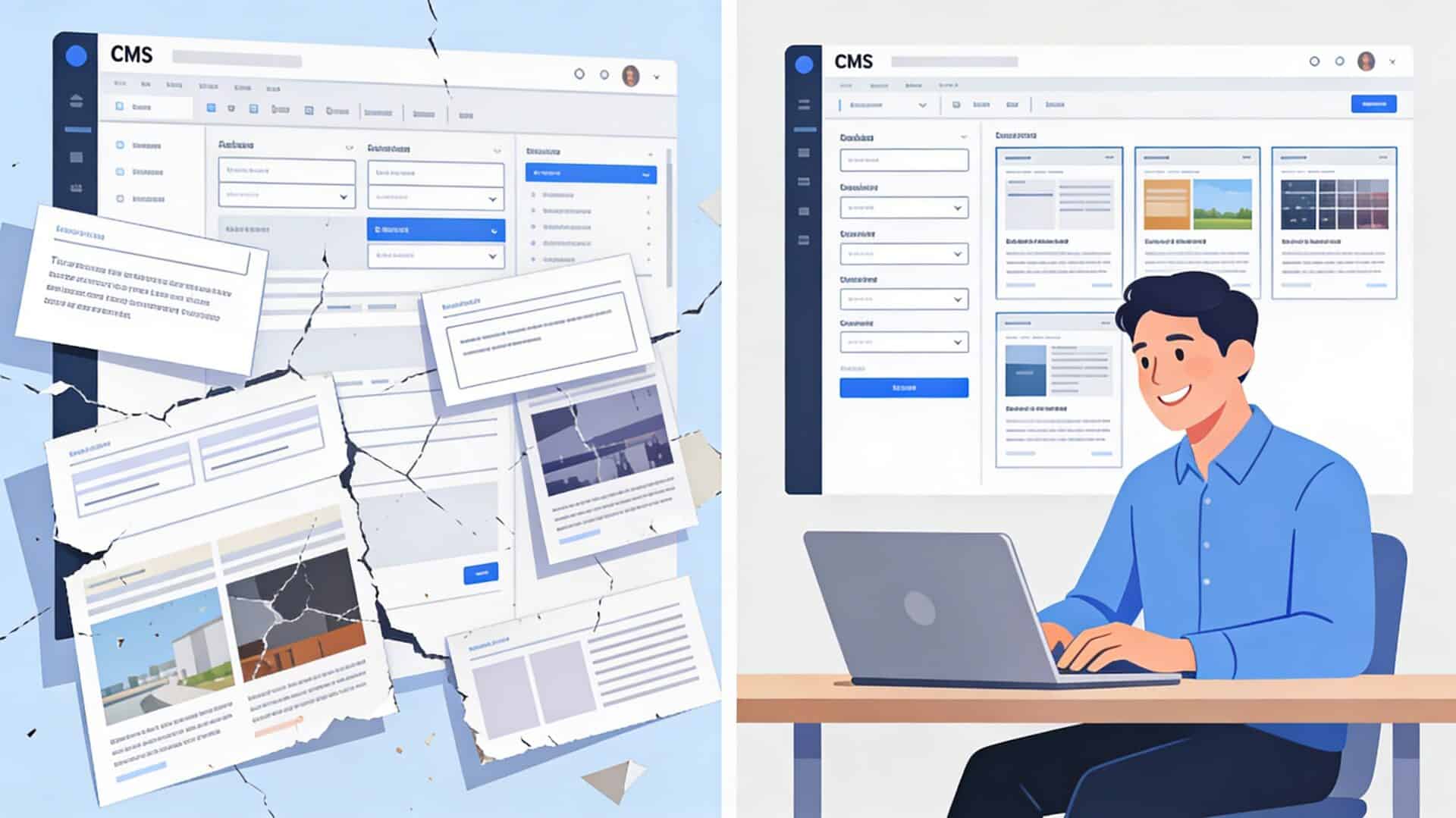
Developing your business website the right way pays off every single time you need to make a change.
Why “built well” matters
For most small and medium businesses, your website isn’t a once-and-done project – it’s a living marketing tool that should grow with your business. If every small change requires a developer, updates get delayed or skipped, and out-of-date information slowly erodes trust.
When your website is set up with updates in mind, you (or your staff) can confidently add, edit and remove content at any time – quickly and easily. That means things like new services, price changes, staff updates and blog posts can go live when they’re actually relevant.
Structure first, polish second
A well-built website site starts with structure: thinking about what needs to be updated regularly, and building the site around that. Instead of one big “catch‑all” page editor, good development breaks content into logical chunks that mirror how you talk about your business.
For example, if you have services, products or staff profiles, each of those should use their own structured fields – titles, descriptions, images, prices, contact details and so on. That way, when you log in to edit a service, you’re simply filling in clearly labelled boxes, not digging around design elements and layouts.
How good website development reduces mistakes
When a site hasn’t been thought through, it’s very easy to break layouts, lose links or publish half‑finished content. A carefully developed website actively prevents that, by giving you safe, guided ways to make the common changes you need.
Done well, you’ll have:
- Clear admin screens that only show what you actually need to manage.
- Custom fields for key information, instead of hand-editing headings and HTML.
- Reusable templates for repeatable pages like services, locations or news.
- Intuitive labels and instructions so staff don’t need a technical background.
The end result is fewer accidental layout issues, fewer “where did that go?” moments, and a much lower chance of publishing incorrect or incomplete information.
Building for your team, not other developers
Open‑source platforms like WordPress are powerful, but they can also be overwhelming if the site is built “for developers” rather than for the people who will actually use it every week. Good development keeps your team front and centre.
That means:
- Avoiding unnecessary complexity in the admin area.
- Sticking with widely used, well-supported plugins.
- Using plain language in the back‑end, not cryptic technical labels.
- Documenting the specific tasks you’ll need to do on your site.
If the administration area feels simple and logical, you’re far more likely to keep your content fresh, which is exactly what search engines – and potential customers – want to see.